

Introduction
E-commerce packaging has one major requirement that traditional packaging sometimes overlooks: the carton must survive the entire journey from fulfillment center to the customer’s hands. Packages may be sorted by conveyors, handled repeatedly, stacked in vehicles, exposed to temperature changes, and delivered through different weather conditions.
That makes packing tape more than a simple closure material. It is part of the shipping system. The right tape should create a dependable seal without slowing the packing line, wasting material, or increasing the risk of cartons opening in transit.
For e-commerce businesses, the best packing tape depends on box size, package weight, carton surface, shipping distance, application method, and brand requirements.
1. Match Tape to Your E-commerce Carton
Start with the box rather than the tape. A small, lightweight parcel does not have the same sealing requirements as a large carton containing multiple products.
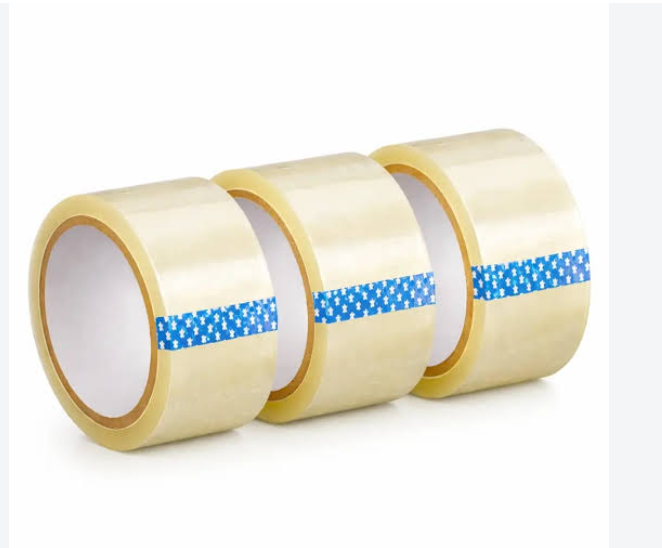
For standard e-commerce boxes, BOPP packing tape is widely used because it offers good tensile strength, consistent adhesion, and compatibility with manual and automated sealing. For heavier cartons, buyers may need a stronger tape grade or a different sealing strategy.
Also consider carton fill. An under-filled carton can flex during handling, creating stress at the center seam. If the box structure is unstable, simply increasing tape strength may not solve the problem.
2. Choose Tape Width and Thickness Carefully
Tape width determines how much of the carton seam is covered, while thickness can influence film strength and handling performance. A standard-width tape is suitable for many everyday parcels, but heavier or larger cartons may require a higher-performance specification.
Do not assume that the thickest tape is automatically the best option. Excess material can increase packaging cost without delivering a meaningful improvement. The objective is to use enough tape performance to meet the actual shipping conditions.
For large e-commerce operations, optimizing tape specification across several carton sizes can reduce packaging cost while maintaining consistent seal quality.
3. Consider Manual and Automated Fulfillment
Small sellers may seal cartons manually with a handheld dispenser. Larger fulfillment operations often use semi-automatic or fully automatic carton sealing equipment.
Manual application requires smooth unwinding and easy dispensing. Machine application requires consistent roll dimensions, controlled unwind, stable adhesion, and compatibility with the machine’s speed and settings.
If your operation is moving toward automation, do not simply use the same tape roll with new equipment. Confirm roll length, width, core size, adhesive performance, and machine compatibility with the tape supplier before changing the packaging line.
4. Account for Shipping Temperature and Humidity
An e-commerce package may spend only a few minutes in the packing area but several days in the supply chain. The tape therefore needs to perform beyond the warehouse.
Cold trucks, hot delivery vehicles, humid warehouses, and temperature changes can affect both the adhesive and the carton surface. Condensation can be particularly problematic when cold cartons are moved into warmer environments.
When shipping internationally or through challenging climates, select a tape grade based on the expected application and service conditions rather than choosing a general-purpose product solely because it is inexpensive.
5. Recycled and Dusty Cartons Need More Attention
Many e-commerce companies are increasing their use of recycled corrugated packaging. This can support sustainability goals, but carton surface characteristics may vary.
Recycled board can be rougher or produce more loose fibers and dust. A contaminated or damp surface can reduce adhesive contact. Before changing tape, inspect the carton surface and sealing process.
A good practice is to test the tape on the exact recycled carton grade used in production. Compare initial adhesion, edge lifting, seal integrity, and performance after storage or transport simulation.
6. Should E-commerce Brands Use Custom Printed Packing Tape?
Custom printed tape can combine sealing with brand communication. A logo, handling message, website, or simple visual identity can turn an ordinary shipping carton into a branded touchpoint.
Printed tape should still be selected first for sealing performance. Printing does not automatically make a tape stronger. The backing, adhesive, thickness, print quality, and application conditions should all be specified separately.
For brands with high order volumes, custom printed BOPP tape can be a practical way to standardize packaging while increasing brand visibility.
7. A Simple E-commerce Tape Selection Formula
A useful purchasing framework is:
Box weight + carton surface + shipping environment + sealing method + shipping duration = tape specification.
For example, a lightweight parcel sealed manually in a dry warehouse may need a standard BOPP tape. A heavier export carton sealed automatically and exposed to temperature changes may require a higher-performance tape grade and more controlled application.
Always validate the specification using real cartons before moving to full-volume procurement.
E-commerce Packing Tape Checklist
Before ordering, check:
● Average and maximum carton weight
● Carton dimensions and board grade
● Recycled or coated surface
● Manual or machine application
● Daily shipping volume
● Typical shipping distance
● Temperature and humidity exposure
● Tape width, thickness, and roll length
● Core and dispenser compatibility
● Custom printing requirements
A small improvement in tape selection can have a large effect when thousands of parcels are shipped every day.
Conclusion
For e-commerce shipping, the best packing tape is the one that creates a consistent seal across your actual carton range and supply chain. BOPP packing tape is a practical starting point for many shipping applications, but the final specification should reflect carton weight, surface condition, environment, and application method.
If your shipping volume is growing, treat tape as a packaging component rather than a commodity. Test the tape on your cartons, measure seal performance, and standardize the specification before purchasing in bulk.
Post time: Sep-18-2026


