

Shipping heavy cartons presents unique packaging challenges. Unlike lightweight packages, heavy boxes experience greater pressure during stacking, transportation, loading, and unloading. If the sealing tape fails, cartons may open unexpectedly, resulting in damaged products, customer complaints, higher logistics costs, and even safety risks.
Choosing the right packing tape is therefore more than a simple purchasing decision—it is a critical part of an effective packaging strategy. The best tape should provide excellent adhesion, withstand varying temperatures, resist tearing, and maintain a strong seal throughout the entire transportation process.
Whether you are shipping industrial equipment, automotive parts, food products, electronics, or export goods, understanding how different packing tapes perform will help you reduce packaging failures and improve supply chain efficiency.
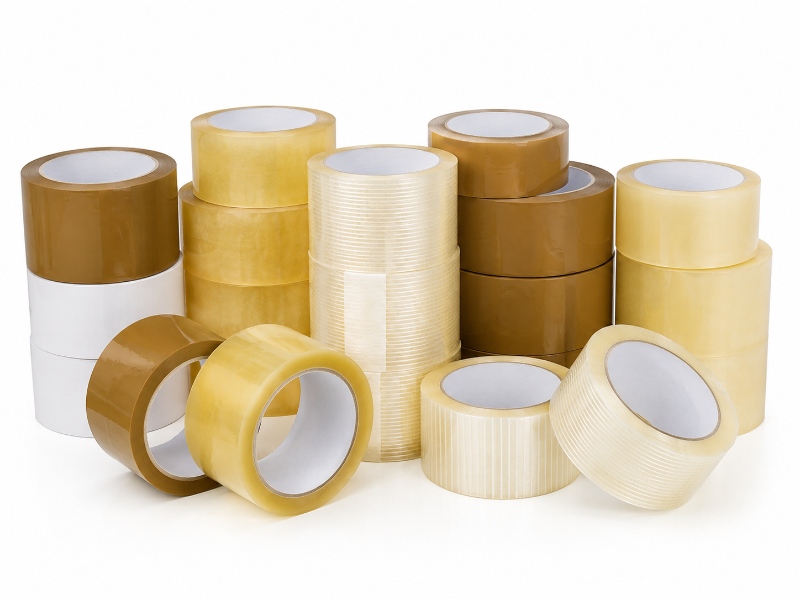
Why Heavy Boxes Require Stronger Packing Tape
Many companies use the same packing tape for every carton regardless of weight. While this may seem cost-effective, it often leads to seal failure when handling heavy products.
Heavy cartons generate significantly higher stress on sealing points during transportation. Factors such as vibration, compression, humidity, and repeated handling increase the likelihood of tape peeling or breaking.
A properly selected packing tape helps:
• Maintain carton integrity during transport.
• Reduce product damage.
• Improve warehouse handling efficiency.
• Lower repacking and return costs.
• Enhance customer satisfaction.
Choosing stronger tape is often far less expensive than dealing with damaged shipments.
What Determines the Strength of Packing Tape?
Many buyers assume thicker tape automatically performs better. In reality, tape performance depends on several factors working together.
Adhesive Quality
The adhesive determines how securely the tape bonds to corrugated cartons.
High-quality adhesives provide:
• Strong initial tack.
• Long-term holding power.
• Resistance to temperature changes.
• Stable performance during long-distance shipping.
Film Thickness
The film acts as the structural support of the tape.
Thicker films generally offer:
• Better tear resistance.
• Improved puncture resistance.
• Higher tensile strength.
However, choosing excessively thick tape may increase packaging costs without providing additional value for lighter cartons.
Carton Surface
Not all cartons are identical.
Recycled cartons, coated surfaces, and dusty packaging require stronger adhesive systems than clean kraft cartons.
Selecting tape based on carton quality is just as important as selecting it based on weight.
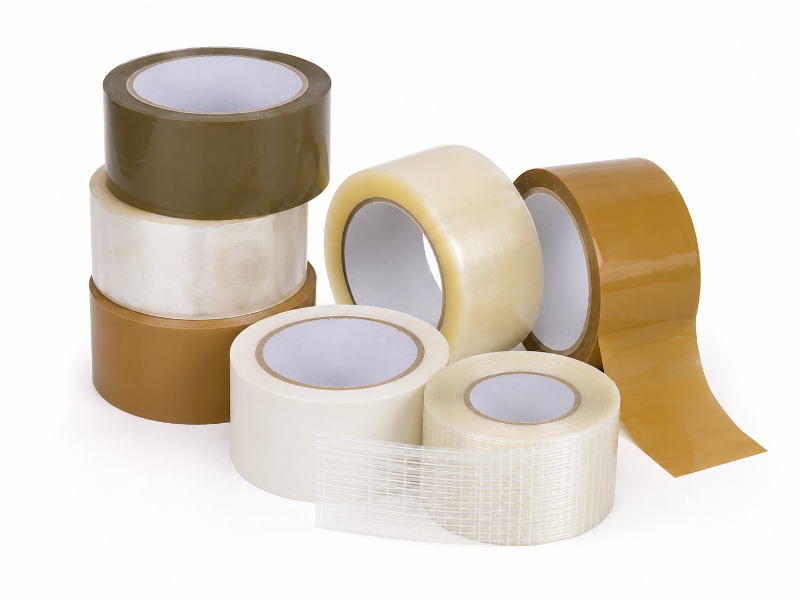
Common Types of Packing Tape for Heavy Boxes
Different packaging applications require different adhesive technologies.
Acrylic Packing Tape
Acrylic tape performs well in long-term storage and moderate shipping environments.
Best for:
• Warehouse storage
• Light to medium cartons
• Stable indoor temperatures
Hot Melt Packing Tape
Hot melt tape offers stronger initial adhesion and faster bonding.
Recommended for:
• Distribution centers
• High-speed packaging lines
• Medium to heavy cartons
It is one of the most widely used tapes in industrial packaging.
Solvent Packing Tape
Solvent adhesive provides outstanding durability under demanding conditions.
Ideal for:
• Heavy export cartons
• Cold storage
• Long-distance shipping
• High-humidity environments
Although more expensive, it delivers excellent long-term reliability.
Reinforced Packing Tape
Reinforced tape incorporates fiberglass filaments to maximize tensile strength.
It is commonly used for:
• Industrial machinery
• Metal components
• Automotive parts
• Extremely heavy packages
This type of tape offers the highest level of package security.
Packing Tape Performance Comparison
|
Tape Type |
Bond Strength |
Temperature Resistance |
Best Application |
|
Acrylic Tape |
Medium |
Excellent |
Storage and general packaging |
|
Hot Melt Tape |
High |
Good |
Daily shipping and warehouse operations |
|
Solvent Tape |
Very High |
Excellent |
Export cartons and heavy-duty logistics |
|
Reinforced Tape |
Maximum |
Excellent |
Industrial equipment and oversized cartons |
This comparison shows that selecting the appropriate adhesive system is more important than simply choosing the thickest tape.
How to Choose Packing Tape Based on Carton Weight
Different box weights require different sealing solutions.
For cartons below 10 kg, high-quality acrylic or hot melt tape usually provides sufficient sealing performance.
For cartons weighing between 10 kg and 20 kg, hot melt tape with increased film thickness is generally recommended to improve holding power.
For cartons exceeding 20 kg, solvent tape or reinforced tape is often the preferred choice because of their superior adhesion and tensile strength.
When shipping export cartons over long distances, it is also important to consider climate conditions, transportation duration, and warehouse environments rather than focusing only on box weight.
Common Packaging Mistakes That Cause Carton Failure
Many carton failures are not caused by poor tape quality but by incorrect packaging practices.
Some of the most common mistakes include:
• Using narrow tape on oversized cartons.
• Applying only one strip of tape to heavy boxes.
• Selecting tape based solely on price.
• Ignoring warehouse temperature and humidity.
• Using low-quality corrugated cartons with premium tape.
• Applying tape to dusty or wet carton surfaces.
Correct sealing methods combined with suitable tape significantly improve packaging reliability.
Why Professional Packaging Suppliers Make a Difference
A reliable packaging supplier provides much more than packaging materials.
Professional manufacturers help customers optimize their packaging systems by recommending suitable adhesive types, film thickness, roll sizes, and application methods based on actual shipping requirements.
They can also provide:
• OEM tape specifications.
• Customized roll dimensions.
• Consistent adhesive quality.
• Stable production batches.
• Technical packaging support.
Working with an experienced supplier helps businesses reduce packaging failures while improving operational efficiency.
Conclusion
Selecting the best packing tape for heavy boxes requires more than choosing the strongest adhesive. Businesses should evaluate carton weight, transportation conditions, storage environments, adhesive performance, and packaging methods together to achieve the best results.
Hot melt tape is an excellent choice for most industrial applications, while solvent and reinforced tapes provide superior protection for heavy-duty export shipments and demanding logistics environments. By combining the right tape with proper sealing techniques and working with a reliable packaging manufacturer, companies can significantly reduce product damage, improve shipping reliability, and lower long-term packaging costs.
FAQ
What is the strongest packing tape for heavy boxes?
Reinforced packing tape generally offers the highest tensile strength, while solvent tape provides excellent long-term adhesion for export packaging.
Is hot melt tape better than acrylic tape?
Hot melt tape provides stronger initial adhesion and is better suited for heavy shipping, while acrylic tape performs well for storage and general packaging.
What tape should I use for export cartons?
Solvent packing tape is usually recommended because it performs well under varying temperatures and humidity during international transportation.
Does thicker packing tape always perform better?
Not necessarily. Adhesive quality, carton condition, and application method are equally important factors.
Can packing tape be customized?
Yes. Professional manufacturers can customize tape width, thickness, roll length, adhesive type, and branding according to specific packaging requirements.
Post time: Jul-03-2026


