

In modern logistics and warehousing operations, pallet packaging plays a critical role in ensuring product safety, transportation efficiency, and supply chain stability. Among the most widely used packaging materials are shrink film and stretch film, both commonly applied in pallet wrapping systems across manufacturing, distribution, and export industries.
The term “pallet shrink stretch film wrap roll” is often used to describe industrial packaging films designed to secure goods on pallets while protecting them from dust, moisture, shifting, and damage during transportation. Although shrink film and stretch film are sometimes confused, they serve different purposes and operate under different application methods.
Understanding how these materials work, their differences, and their ideal use cases is essential for businesses seeking to optimize packaging performance and reduce operational costs.
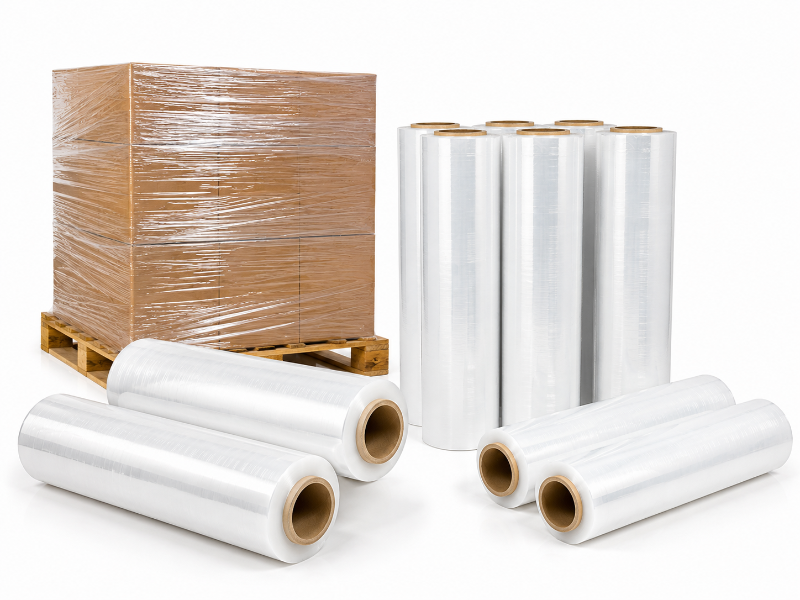
What Is Pallet Stretch Film and Shrink Film?
Stretch film and shrink film are two primary packaging materials used for pallet stabilization.
Stretch Film
Stretch film is a highly elastic plastic film that is stretched around palletized goods to secure them tightly.
It relies on tension to hold products together.
Shrink Film
Shrink film is applied loosely and then heated to shrink tightly around the product.
It requires heat tunnels or heat guns for activation.
Why Pallet Packaging Film Is Essential in Logistics
Pallet packaging is not just a protective step.
It is a critical part of supply chain efficiency.
Businesses use pallet film to:
• Stabilize goods during transport
• Prevent product shifting
• Reduce damage rates
• Improve warehouse stacking efficiency
• Protect against dust and moisture
Key Differences Between Stretch Film and Shrink Film
Although both are used for packaging, their performance differs significantly.
Stretch film is widely used in logistics, while shrink film is more common in retail bundling applications.
Key differences include application method, cost efficiency, and operational requirements.
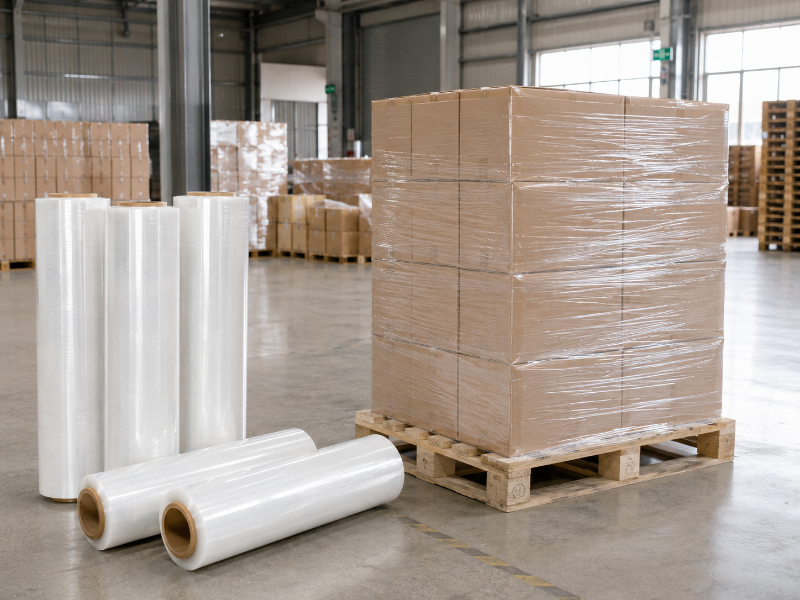
Stretch Film vs Shrink Film Comparison
Below is a simplified industry comparison:
Stretch Film:
• No heat required
• Lower operational cost
• Faster application
• High pallet efficiency
• Widely used in logistics
Shrink Film:
• Requires heat activation
• Strong visual packaging effect
• Higher energy consumption
• Better for product bundling
• Common in retail packaging
Why Stretch Film Is Dominant in Pallet Packaging
In industrial logistics, stretch film is far more widely used than shrink film.
Lower Operational Cost
No heating equipment is required, reducing energy consumption.
Faster Packaging Speed
Stretch wrapping machines can wrap pallets in seconds.
Better Warehouse Efficiency
Ideal for high-volume logistics operations.
Strong Load Stability
Modern stretch films provide excellent holding force.
Types of Pallet Stretch Film Rolls
Different stretch film types are designed for different applications.
Hand Stretch Film
Used for manual wrapping operations.
Suitable for small warehouses or low-volume packaging.
Machine Stretch Film
Designed for automatic wrapping machines.
Provides consistent tension and high efficiency.
Pre-Stretched Film
Already stretched during production.
Reduces material consumption and improves cost efficiency.
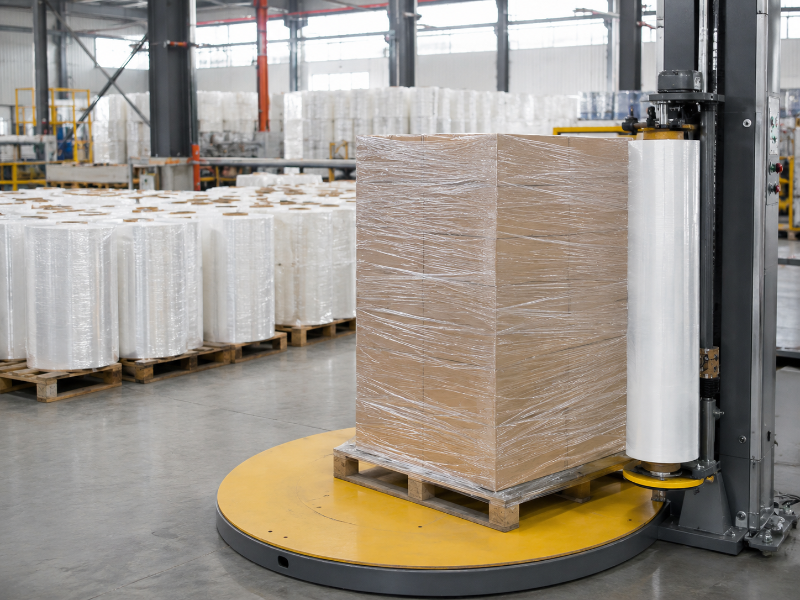
Key Factors Affecting Stretch Film Performance
Choosing the right film depends on several operational conditions.
Film Thickness
Thicker film provides higher strength but increases cost.
Stretch Ratio
Higher stretch ratios improve coverage efficiency.
Load Type
Light, medium, and heavy loads require different film strengths.
Transportation Distance
Long-distance shipping requires stronger holding force.
How to Choose the Right Pallet Stretch Film Roll
Selecting the correct film is essential for reducing damage and improving efficiency.
Businesses should evaluate:
• Product weight and stability
• Warehouse automation level
• Transportation conditions
• Cost per pallet
• Required load security level
Common Mistakes in Pallet Film Selection
Many companies experience unnecessary losses due to incorrect film selection.
Common mistakes include:
• Using manual film for machine systems
• Choosing wrong thickness
• Ignoring load stability
• Overusing material due to poor wrapping technique
These mistakes can increase packaging cost by 10%–30%.
Cost Efficiency in Pallet Stretch Film Usage
Packaging cost is not only about film price.
It includes:
• Labor cost
• Machine efficiency
• Film consumption per pallet
• Damage reduction rate
Optimizing film selection significantly reduces total logistics cost.
Industrial Applications of Stretch Film Rolls
Stretch film is widely used across industries such as:
• Manufacturing
• Food and beverage
• Electronics
• E-commerce fulfillment
• Export logistics
• Construction materials
Its flexibility makes it suitable for almost all palletized goods.
Sustainability Trends in Stretch Film Packaging
Modern packaging trends focus on environmental responsibility.
Thinner but Stronger Films
Advanced resin technology reduces material usage.
Recyclable Packaging Materials
Increasing demand for eco-friendly solutions.
Reduced Carbon Footprint
Lightweight materials reduce transportation emissions.
Choosing the Right Stretch Film Manufacturer
A professional supplier plays a critical role in packaging efficiency.
Important factors include:
• Stable film quality
• OEM customization capability
• Technical support
• Production capacity
• Quality control systems
Conclusion
Pallet shrink and stretch film rolls are essential materials in modern logistics and industrial packaging. While shrink film is more suitable for retail and product bundling applications, stretch film dominates pallet packaging due to its cost efficiency, speed, and operational simplicity.
Choosing the right stretch film type—whether hand, machine, or pre-stretched—can significantly improve warehouse efficiency, reduce material waste, and enhance load stability. By working with a reliable stretch film manufacturer, businesses can optimize packaging performance and achieve long-term cost savings while ensuring safe and stable transportation of goods across the supply chain.
FAQ
What is pallet stretch film used for?
It is used to secure palletized goods during storage and transportation to prevent shifting and damage.
What is the difference between shrink film and stretch film?
Shrink film requires heat to tighten, while stretch film relies on tension wrapping.
Which is better for pallets, shrink or stretch film?
Stretch film is generally better for pallet packaging due to lower cost and higher efficiency.
What types of stretch film are available?
Hand stretch film, machine stretch film, and pre-stretched film are commonly used.
How much stretch film is needed per pallet?
It depends on load size and stability, but typically ranges from 120–250 meters.
Can stretch film be customized?
Yes, manufacturers can customize thickness, width, and stretch ratio.
Post time: Jul-02-2026


