

A PET strap data sheet may place several force-related values close together, although they answer different questions. Breaking load belongs to a particular strip of material. Tensile strength relates force to cross-sectional area. Application tension describes what the tool introduces, joint strength describes what survives at the closure, and retained tension describes what remains on the package later. Reading one value as if it represented all five is the most common source of an unsafe comparison.
The right way to judge PET strapping strength is to follow the measurement from test specimen to finished package. Units, specimen dimensions, conditioning, test method, joint efficiency, and production variation all affect what the number can legitimately support.
Start with the Force at Rupture
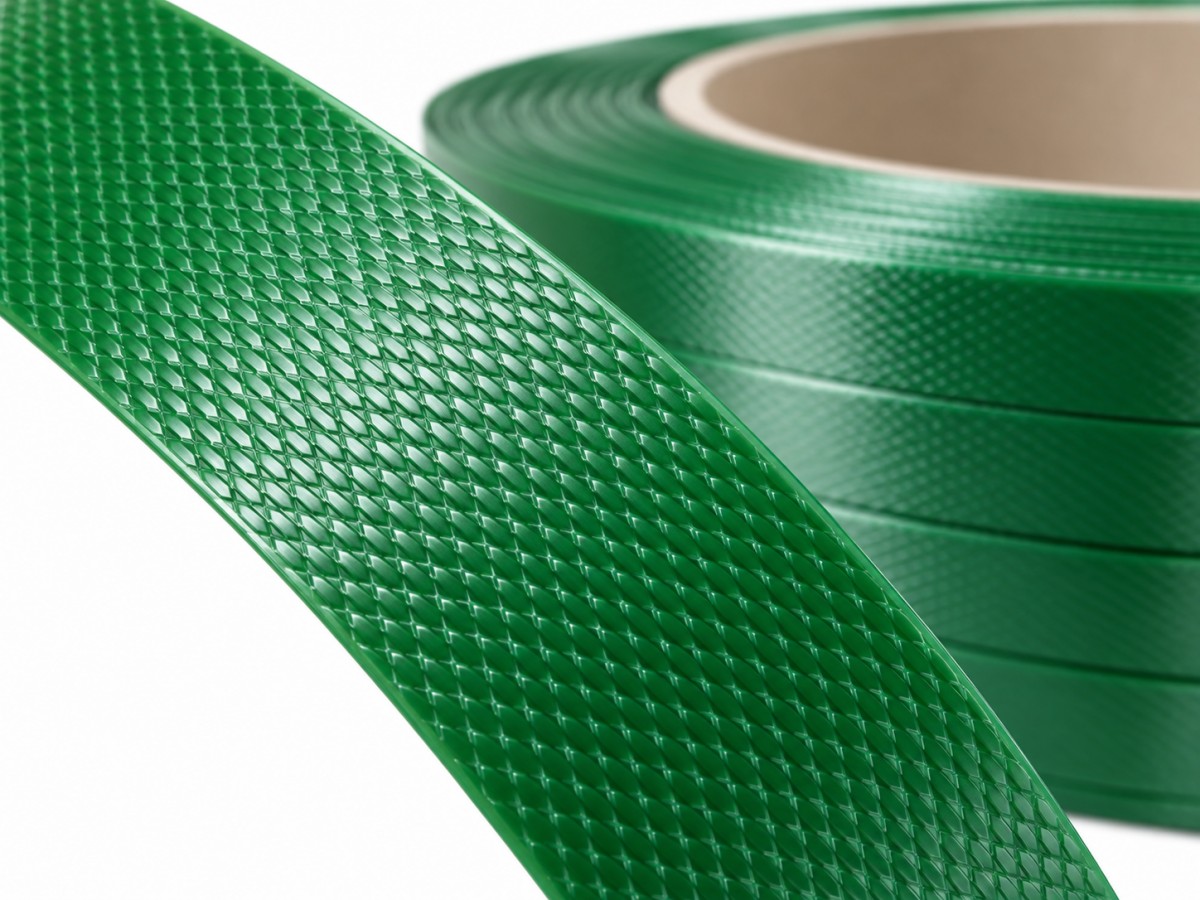
Breaking load is the force required to rupture a particular strap specimen under a defined test. Because it applies to a specific width, thickness, material, and manufacturing condition, a figure for one size must not be transferred to another.
Use Tensile Strength to Compare Material Efficiency
Tensile strength relates force to cross-sectional area. In simplified form, tensile strength equals force divided by width multiplied by thickness. This helps compare material performance, but nominal dimensions and actual dimensions may differ, and embossed profiles complicate simple area assumptions. Use the supplier test method for purchasing decisions.
Convert Force Units before Comparing Data Sheets
Strapping data may use N, kN, kgf, or pounds-force. They are units of force, not cargo mass. Approximately 1 kgf equals 9.80665 N, but conversion alone does not tell how much cargo a strap can secure. Dynamic acceleration, strap angle, friction, strap count, and joint performance still matter.
Move from the Specimen to the Closed Loop
A tensioned loop contains a weld, seal, or buckle that normally retains only part of parent-strap strength. Ask for joint efficiency or, preferably, a tested joint breaking force for the intended tool and settings. Contamination, poor alignment, insufficient cooling, worn weld parts, or incorrect overlap can reduce the result.
Parent-strap result
Useful for material comparison and incoming quality checks.
Jointed-loop result
Closer to installed performance because it includes the closure.
Applied tension
The force introduced during packaging; it should remain below the approved system limit.
Separate Product Range Claims from Grade Evidence
A product-range page shows the breadth of available widths, thicknesses, surfaces, and stated force levels. It does not establish the minimum result for every grade within that range. For technical purchasing, move from the range page to the exact product code and ask whether the reported value is typical, average, or guaranteed minimum.
The evidence should identify specimen dimensions, conditioning, test speed, number of samples, failure mode, and the force unit used. If a value belongs to the parent strap, do not present it as jointed-loop strength. If dimensions or embossing differ from the tested specimen, the result should not be transferred without confirmation.
Keep Initial Tension Separate from Remaining Restraint
A strap can have a high laboratory break value yet lose useful restraint because the package settles, the joint slips, or the applied tension was inconsistent. PET is often selected for its balance of strength, controlled elongation, and recovery. Measure the package after dwell and handling rather than relying solely on the initial tool display.
Allow for Unequal Force between Loops
Two identical straps do not guarantee exactly twice the usable restraint. Tension variation, placement, corner radius, package stiffness, and load movement cause unequal sharing. Design methods should account for that inequality and the consequence of one loop being damaged.
Sample Rolls across the Lot
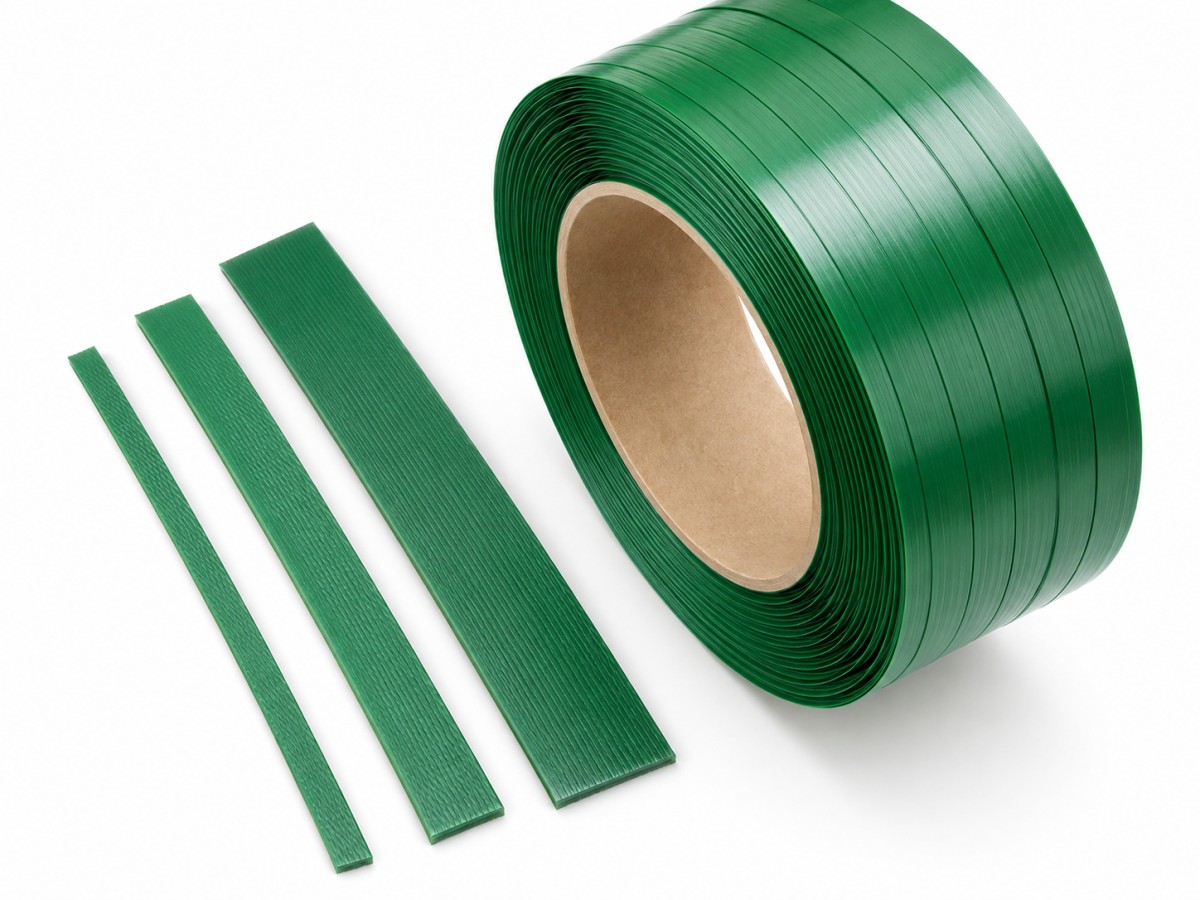
Record roll identification and sample strap across the width of the coil. Verify width, thickness, surface, winding, visible edge damage, and the agreed mechanical test. Trend results by lot rather than checking only when breakage appears.
Visual checks
Look for splits, notches, contamination, inconsistent embossing, telescoping, and edge damage.
Dimensional checks
Use calibrated instruments and an agreed sampling method.
Mechanical checks
Use a controlled tensile method and retain failed samples when results are abnormal.
Use Package Testing for a Different Question
A tensile machine tells whether a specimen meets its material requirement. A package test asks whether the selected loop arrangement controls a particular shipment. Keep the two decisions separate. First qualify the roll against the agreed laboratory method; then evaluate the tool, closure, corners, load construction, dwell, and handling as an assembled pack. Passing one test cannot be used as evidence that the other was performed.
Define How Variation Will Be Judged
Mechanical results vary by specimen, roll position, lot, conditioning, grip arrangement, and test speed. A specification should define the statistic used for release: an individual minimum, a lot average, or both. It should also state the sample count, retest rule, and action when one value falls outside the limit.
Do not judge a process only by whether its average remains above the requirement. A widening spread can signal unstable orientation, dimensions, edges, or thermal history before the mean result fails. Trend individual readings and fracture locations, and compare abnormal samples with an approved reference roll.
Write a Testable Purchase Requirement
A complete purchase description should identify material, width, thickness, tolerances, surface, color, minimum break load, elongation or recovery requirement, test method, coil dimensions, winding, core, joint method, equipment range, labeling, and lot traceability. Use consistent force units and state whether data applies to the parent strap or a jointed loop.
Incoming inspection and production approval should use the same definitions. Otherwise a supplier can pass a laboratory number while the receiving plant evaluates a different property. Align terminology before approving the first order.
Conclusion
PET strapping can provide high break force for medium- and heavy-duty packaging, but its real strength is the performance of the installed system. Read units correctly, distinguish material strength from strap breaking load, verify the joint, and confirm the package under representative conditions. Guangzhou Nansha District Youjian Plastic Co., Ltd. should be evaluated through exact grade data and an approved package trial, not a range headline alone.
FAQ
Is breaking load the same as the weight of cargo a strap can hold?
No. Breaking load is a laboratory force for a specimen, while cargo restraint depends on the complete package system and transport forces.
Why is joint strength lower than strap strength?
The joining process introduces a local interface whose efficiency depends on method, tool condition, settings, overlap, and cleanliness.
Can the strength of several straps simply be added?
Not safely without accounting for unequal load sharing, geometry, joint efficiency, damage, and applicable design rules.
What data should appear on a PET strap specification?
Include width, thickness, tolerances, surface, minimum breaking load, elongation, test method, coil details, joint method, and lot traceability.
Post time: Oct-18-2026


