

Stretch wrap is one of the most widely used materials in modern logistics and warehousing operations. It plays a critical role in securing palletized goods, preventing load shifting, protecting products during transportation, and improving overall supply chain efficiency. However, one of the most frequently asked questions among procurement managers and warehouse operators is how much stretch wrap is actually needed per pallet.
Understanding the correct usage amount is essential not only for cost control but also for ensuring packaging stability. Using too little film can lead to unstable loads and product damage, while using too much increases unnecessary packaging costs and material waste. Striking the right balance is key to achieving efficient and cost-effective pallet wrapping operations.
This guide explains how stretch wrap usage is calculated per pallet, what factors influence consumption, and how businesses can optimize their packaging processes to reduce costs without compromising load stability.
Why Stretch Wrap Consumption Per Pallet Matters
Stretch wrap usage directly impacts both operational efficiency and logistics cost.
Proper control of film usage helps businesses:
• Reduce packaging material waste
• Improve pallet stability
• Lower overall packaging costs
• Increase wrapping efficiency
• Improve transportation safety
Even small improvements in film usage per pallet can lead to significant annual cost savings for large-scale operations.
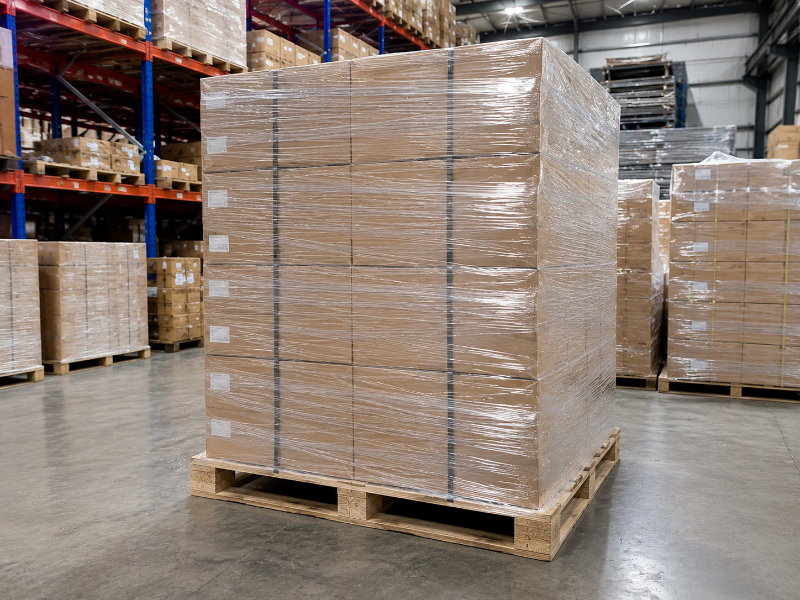
What Is the Average Stretch Wrap Usage Per Pallet?
Although actual usage varies depending on product type and wrapping method, there are general industry benchmarks.
In most warehouse operations, a standard pallet typically requires between:
• 150 meters to 250 meters of stretch film for manual wrapping
• 120 meters to 200 meters for machine wrapping
However, this range can change significantly depending on load type and wrapping technique.
Key Factors That Affect Stretch Wrap Usage Per Pallet
Several variables influence how much film is needed for each pallet.
Load Size and Height
Larger or taller pallets require more film coverage to ensure stability.
Load Weight and Stability
Heavier or unstable loads often require additional layers for reinforcement.
Wrapping Method
Machine wrapping generally uses less film compared to manual wrapping due to controlled tension.
Film Thickness
Thicker film may require fewer layers but can increase material cost per meter.
Stretch Ratio
Higher stretch ratios allow more pallet coverage with less material.
How to Calculate Stretch Wrap Usage Per Pallet
A basic calculation method can help estimate film usage more accurately.
The formula is not fixed but is based on coverage layers, pallet dimensions, and stretch rate.
A simplified approach includes:
• Base wrapping layers (2–3 layers minimum)
• Reinforced bottom and top layers
• Load-specific reinforcement zones
For example:
• Light goods: 2–3 layers
• Medium stability loads: 3–5 layers
• Heavy or unstable loads: 5–7 layers
The more unstable the load, the higher the film consumption.
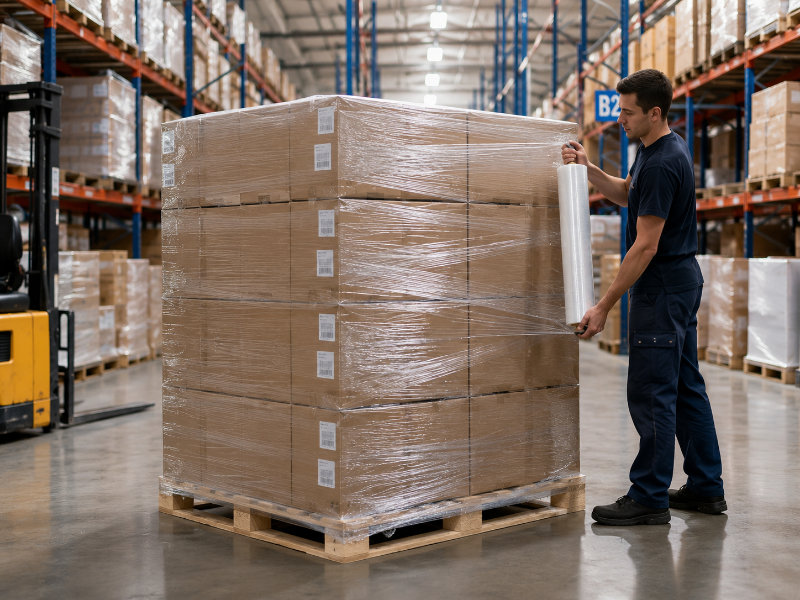
Manual Wrapping vs Machine Wrapping Consumption Differences
Different wrapping methods significantly affect film usage efficiency.
Manual Wrapping
• Higher film consumption
• Inconsistent tension control
• Operator-dependent efficiency
• Suitable for low-volume operations
Machine Wrapping
• More controlled film usage
• Consistent tension
• Reduced material waste
• Ideal for high-volume logistics centers
Machine systems can reduce film usage by up to 20–30% in many cases.
Industry Benchmark: Stretch Wrap Usage Optimization Data
Below is a general industry reference for pallet wrapping efficiency:
• Manual wrapping efficiency: 70%–80%
• Semi-automatic wrapping efficiency: 80%–90%
• Fully automatic wrapping efficiency: 90%–95%
Higher efficiency means less film waste and better cost control.
How to Reduce Stretch Wrap Consumption Per Pallet
Optimizing film usage does not mean reducing safety. It means improving efficiency.
Use Pre-Stretched Film
Pre-stretched film reduces material usage while maintaining load stability.
Optimize Wrapping Patterns
Applying correct wrapping techniques reduces unnecessary overlaps.
Adjust Machine Settings
Proper tension and rotation settings significantly reduce film waste.
Choose the Right Film Thickness
Using the correct micron level prevents overuse of material.
Train Operators
Even minor improvements in technique can reduce consumption.
Common Mistakes That Increase Film Usage
Many companies unknowingly waste stretch film due to poor practices.
• Overlapping too many layers unnecessarily
• Using incorrect film thickness
• Poor pallet stacking stability
• Ignoring machine calibration
• Lack of standardized wrapping procedures
These issues often increase costs by 10%–25% annually.
How Stretch Film Quality Affects Consumption
Not all stretch films perform the same.
High-quality stretch film allows:
• Better stretch ratio
• Stronger load retention
• Fewer wrapping layers needed
• Lower overall consumption
Low-quality film often requires more material to achieve the same stability.
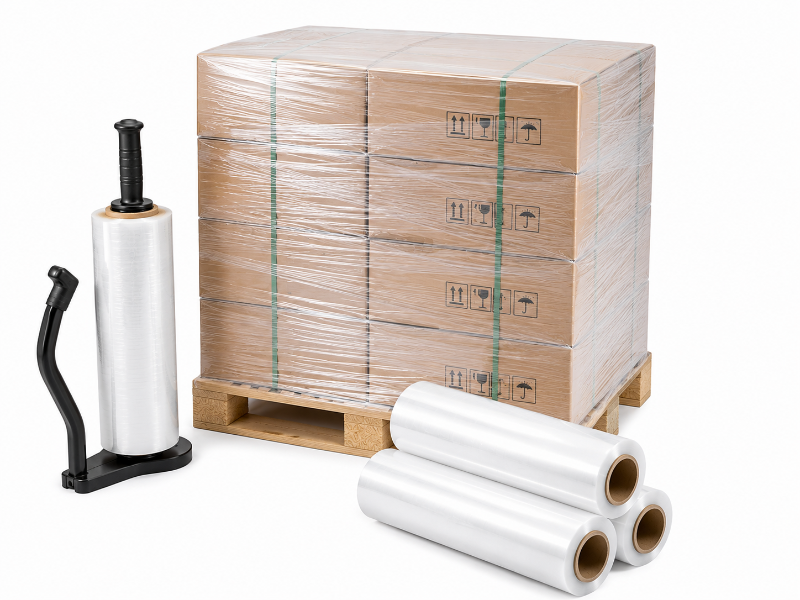
Choosing the Right Stretch Film Manufacturer
A professional manufacturer plays a critical role in optimizing film usage.
Key factors include:
• Stable film thickness control
• High stretch performance consistency
• OEM customization capability
• Technical support for wrapping optimization
• Quality assurance systems
Working with an experienced supplier helps reduce long-term packaging costs.
Conclusion
Understanding how much stretch wrap is needed per pallet is essential for controlling packaging costs and ensuring safe transportation. While the exact usage depends on load type, wrapping method, and film quality, most businesses can significantly improve efficiency by optimizing their wrapping process and selecting the right materials.
By combining proper calculation methods, improved wrapping techniques, and high-quality stretch film, companies can reduce waste, improve pallet stability, and achieve better logistics performance. For large-scale operations, even small improvements in film usage per pallet can result in substantial long-term cost savings and operational efficiency gains.
FAQ
How much stretch wrap is needed for one pallet?
On average, 150–250 meters for manual wrapping and 120–200 meters for machine wrapping, depending on load type.
What affects stretch wrap usage per pallet?
Load size, weight, wrapping method, film thickness, and stretch ratio all affect consumption.
Does machine wrapping use less film?
Yes, machine wrapping typically uses 20%–30% less film due to controlled tension and consistency.
How many layers of stretch wrap are needed?
Usually 2–7 layers depending on load stability and product type.
Can better film reduce usage?
Yes, high-quality stretch film with better stretchability reduces overall consumption.
How can I reduce stretch film cost?
Optimize wrapping methods, use pre-stretched film, adjust machine settings, and choose a reliable manufacturer.
Post time: Jul-01-2026


