

Stretch wrap has become one of the most essential packaging materials in modern logistics, warehousing, and manufacturing. It secures palletized goods, protects products during transportation, reduces load shifting, and helps companies improve overall supply chain efficiency. However, not all stretch films perform the same way.
When purchasing stretch wrap, buyers are often faced with one important question: Should they choose cast stretch wrap or blown stretch wrap? Although both products are designed to stabilize loads and protect goods, they are manufactured using different production processes and exhibit different performance characteristics.
Choosing the wrong type of stretch film may result in higher packaging costs, unstable pallet loads, damaged products, or unnecessary material waste. Understanding the strengths and limitations of each option allows businesses to make better purchasing decisions while improving packaging performance.
This guide compares cast stretch wrap and blown stretch wrap from multiple perspectives to help businesses identify the best solution for their specific packaging requirements.
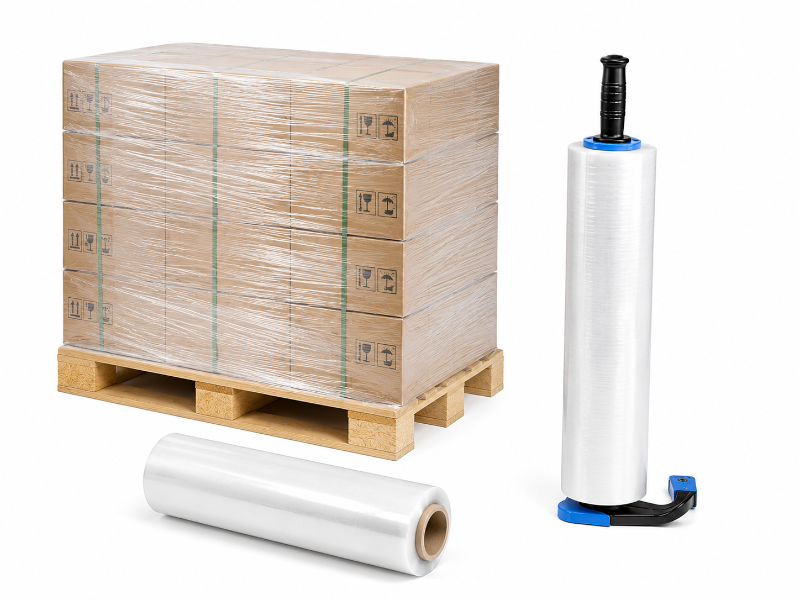
Why Stretch Wrap Selection Matters
Stretch wrap is more than just a packaging material.
It directly influences transportation safety, warehouse efficiency, labor productivity, and overall packaging costs.
Selecting the appropriate film helps businesses:
• Reduce product damage
• Improve pallet stability
• Lower packaging expenses
• Increase operational efficiency
• Enhance customer satisfaction
A well-selected stretch film becomes an important component of an efficient logistics system.
What Is Cast Stretch Wrap?
Cast stretch wrap is produced through a cast extrusion process in which molten resin is spread across chilled rollers to form a smooth and transparent film.
Because the cooling process is rapid, the film develops excellent optical clarity and consistent thickness.
Key Characteristics of Cast Stretch Wrap
Cast stretch wrap is known for:
• High transparency
• Quiet unwinding
• Smooth surface
• Excellent machine processability
• Uniform film thickness
These features make it a popular choice in distribution centers and automated packaging operations.
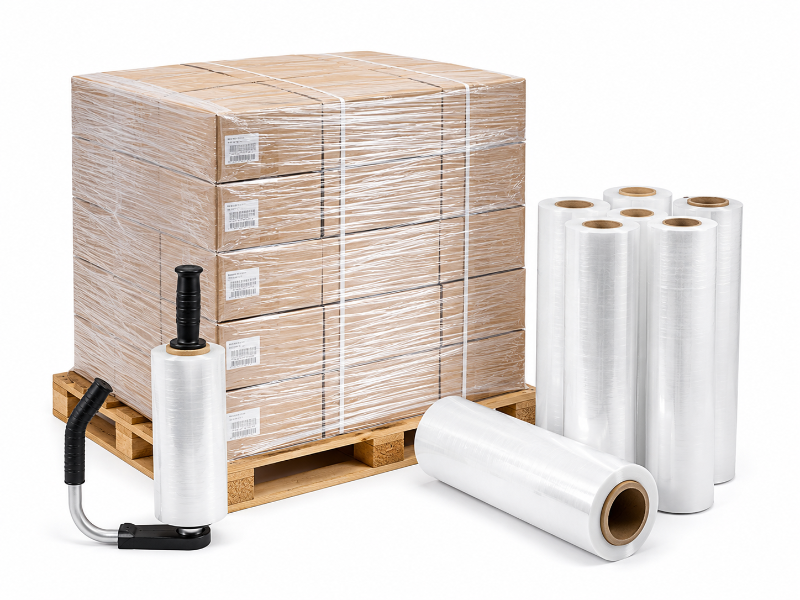
What Is Blown Stretch Wrap?
Blown stretch wrap is manufactured using a blown extrusion process. During production, molten plastic is inflated into a large bubble before cooling naturally.
This slower cooling process creates a stronger molecular structure, resulting in improved mechanical performance.
Key Characteristics of Blown Stretch Wrap
Blown stretch wrap offers:
• Superior puncture resistance
• Higher load retention
• Better tear resistance
• Strong holding force
• Excellent performance under demanding transportation conditions
It is commonly used for heavy or irregular loads.
Manufacturing Process Creates Performance Differences
The production process directly determines the characteristics of each stretch film.
Cast technology emphasizes production efficiency and appearance, while blown technology focuses on durability and strength.
Because of these manufacturing differences, businesses should evaluate packaging needs before selecting a product.
Performance Comparison Between Cast and Blown Stretch Wrap
The two products perform differently under various packaging conditions.
|
Performance Factor |
Cast Stretch Wrap |
Blown Stretch Wrap |
|
Transparency |
Excellent |
Moderate |
|
Noise During Unwinding |
Very Low |
Higher |
|
Puncture Resistance |
Good |
Excellent |
|
Tear Resistance |
Good |
Excellent |
|
Load Holding Force |
Good |
Very High |
|
Stretch Consistency |
Excellent |
High |
|
Machine Application |
Excellent |
Good |
|
Cost Efficiency |
Higher |
Moderate |
Cost Efficiency Higher Moderate
Which Stretch Film Offers Better Cost Efficiency?
Packaging costs extend beyond the price per roll.
Businesses should also evaluate operational efficiency and material utilization.
Cast Stretch Wrap Advantages
For many standard packaging operations, cast film provides:
• Lower production costs
• Faster wrapping speeds
• Reduced machine downtime
• Excellent visibility for barcode scanning
These advantages often reduce total operating costs.
Blown Stretch Wrap Advantages
Although blown film may have a higher purchase cost, it often reduces product damage when transporting heavy or unstable loads.
For demanding environments, its higher durability can offset the initial investment.
Application Scenarios for Cast Stretch Wrap
Different industries benefit from different stretch films.
Cast stretch wrap is commonly used in:
• Food packaging
• Beverage logistics
• Consumer goods
• E-commerce fulfillment
• Warehouse pallet wrapping
• Automated packaging lines
Its clarity also improves inventory identification.
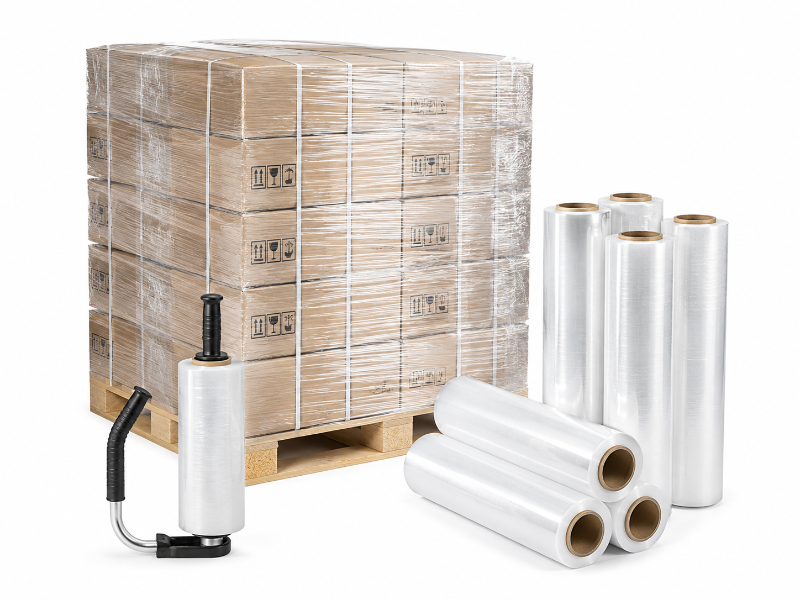
Application Scenarios for Blown Stretch Wrap
Blown stretch wrap performs well under more challenging conditions.
Typical applications include:
• Industrial machinery
• Construction materials
• Metal products
• Chemical containers
• Export shipments
• Heavy pallet loads
Its strong holding force helps maintain load stability during long-distance transportation.
Factors to Consider Before Choosing Stretch Wrap
Selecting the right film requires evaluating several operational factors.
Product Weight
Heavier products generally require stronger load retention.
Transportation Distance
Long-distance shipments demand better puncture and tear resistance.
Storage Environment
Outdoor storage may require additional film durability.
Wrapping Equipment
Automatic wrapping machines often perform exceptionally well with cast stretch wrap.
Manual wrapping operations may benefit from either product depending on application needs.
Working with a Professional Stretch Wrap Manufacturer
Choosing the right supplier is just as important as selecting the right product.
Professional manufacturers provide more than production capacity.
They also offer technical support and customized packaging solutions.
A reliable manufacturer should provide:
• Stable product quality
• Consistent raw materials
• OEM customization
• Flexible production capacity
• Technical consultation
• Quality assurance systems
These capabilities help businesses optimize packaging performance over the long term.
Future Trends in Stretch Wrap Technology
Packaging materials continue to evolve.
Several industry trends are shaping future stretch wrap development.
Sustainable Packaging
Manufacturers are developing thinner films with equal performance to reduce plastic consumption.
High-Performance Resin Technology
Advanced materials improve strength while reducing material usage.
Smart Manufacturing
Automation continues to improve film consistency and production efficiency.
Conclusion
Both cast stretch wrap and blown stretch wrap offer valuable advantages, but neither is universally better. The ideal choice depends on your products, packaging process, transportation conditions, and overall operational goals.
Cast stretch wrap is an excellent solution for businesses seeking high clarity, quiet operation, and cost-efficient packaging in automated environments. Blown stretch wrap provides superior puncture resistance and load stability, making it ideal for heavy-duty industrial applications.
By carefully evaluating packaging requirements and partnering with an experienced stretch wrap manufacturer, businesses can improve packaging efficiency, reduce operational costs, and ensure safer product transportation throughout the supply chain.
FAQ
What is the main difference between cast stretch wrap and blown stretch wrap?
Cast stretch wrap is produced through a cast extrusion process, offering excellent clarity, quiet operation, and consistent thickness. Blown stretch wrap is manufactured using a blown extrusion process, providing higher puncture resistance and stronger load retention.
Which stretch wrap is better for automatic wrapping machines?
Cast stretch wrap is generally preferred for automatic wrapping systems because of its smooth surface, consistent thickness, and quiet unwinding performance.
Which type of stretch wrap is better for heavy loads?
Blown stretch wrap is typically recommended for heavy or irregular pallet loads because it offers greater puncture resistance and stronger holding force.
Is cast stretch wrap more economical?
For many standard packaging operations, cast stretch wrap provides excellent cost efficiency due to its lower production cost and faster application speed.
Can stretch wrap be customized?
Yes. Professional manufacturers can customize film thickness, width, roll length, core size, stretch performance, and packaging specifications to meet different industrial requirements.
How do I choose a reliable stretch wrap manufacturer?
Choose a supplier with advanced manufacturing equipment, strict quality control, OEM customization capabilities, technical support, and stable production capacity.
Post time: Jun-30-2026


